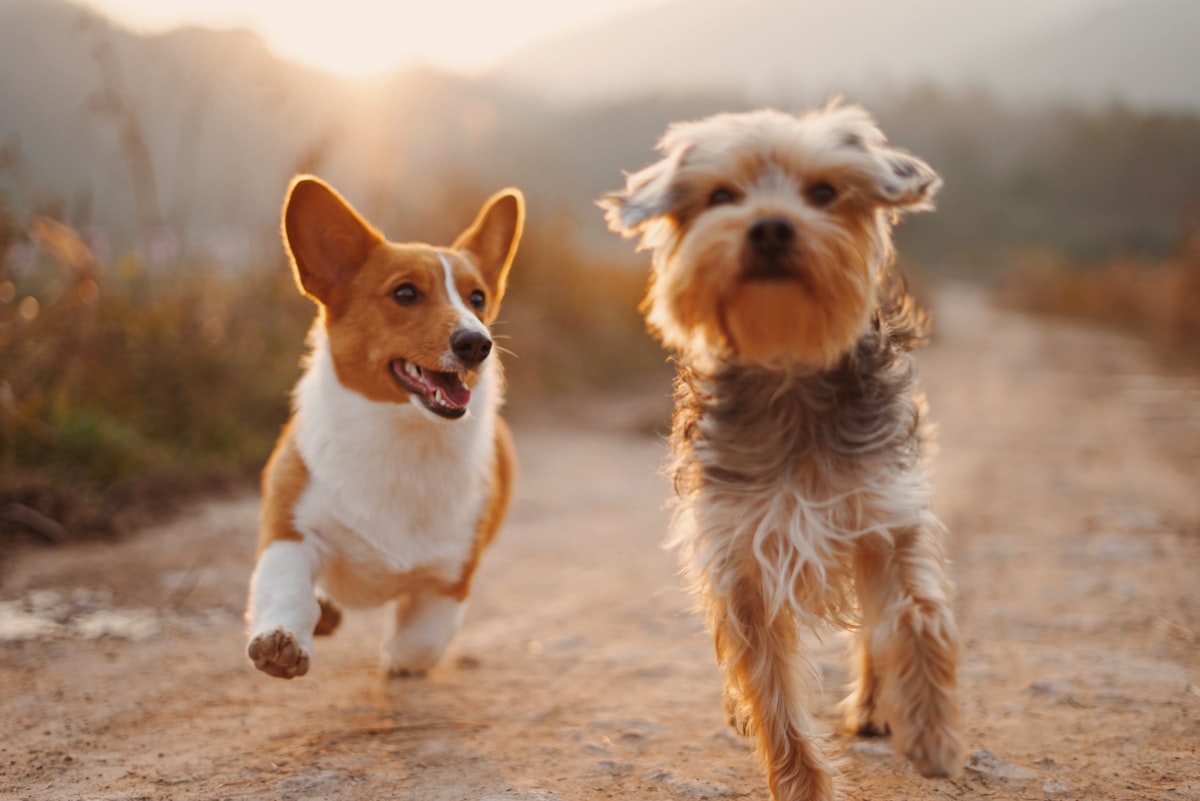
Every dog is different. A young Border Collie's play needs look nothing like those of a senior Basset Hound. Blanket recommendations like "dogs need one hour of exercise daily" aren't very useful when real dogs vary so dramatically.
Instead of fixed prescriptions, let's talk about how to read your individual dog and figure out what they actually need.
The Factors That Matter
Age
Puppies (under 1 year): Need frequent, short play sessions rather than marathon ones. Their growing bodies can be damaged by too much impact. Aim for multiple 15-20 minute sessions throughout the day, with plenty of rest between.
Adolescents (1-2 years): Often have the highest energy levels of any life stage. They may need significant play time — sometimes 1-2 hours of active play daily — to stay balanced.
Adults (2-7 years): Most dogs settle into a rhythm that requires 30-60 minutes of social play several times per week, depending on breed and individual temperament.
Seniors (7+ years): Still benefit from play but tire more quickly. Shorter, gentler sessions with appropriate playmates keep them engaged without overexertion.
Breed tendencies
Breed gives you a starting point, not a guarantee. Generally:
- High-energy breeds (Herding dogs, retrievers, terriers) often need substantial daily play
- Moderate-energy breeds (Many spaniels, standard poodles, bulldogs) do well with regular but less intense play
- Lower-energy breeds (Basset hounds, Shih Tzus, some giant breeds) may be satisfied with shorter, less frequent sessions
But breed is just a tendency. Plenty of "high-energy breed" dogs are couch potatoes, and some "low-energy breed" dogs have endless stamina.
Individual temperament
Your dog's personality matters most. Some dogs are simply more play-motivated than others. Watch your specific dog and let their behavior guide you.
Signs Your Dog Needs More Play
Your dog is probably telling you if they need more social play. Look for:
- Restlessness and inability to settle at home
- Destructive behavior (chewing, digging, shredding)
- Excessive barking or whining
- Over-excitement when they see other dogs
- Pestering you constantly for attention
- Weight gain despite appropriate feeding
- Difficulty focusing during training
These behaviors often disappear when play needs are met.
Signs Your Dog Is Getting Enough
A dog with adequate play will typically:
- Settle calmly at home between activities
- Sleep well and deeply
- Show appropriate (not excessive) interest in other dogs
- Maintain a healthy weight
- Focus well during training
- Seem generally content and relaxed
Quality Over Quantity
Here's something that surprises many owners: 30 minutes of high-quality social play can be more satisfying than 2 hours of a solo walk. The intensity and type of activity matters more than raw duration.
Dog-to-dog play is particularly efficient because:
- The exercise is self-regulating — dogs match each other's intensity
- It provides mental stimulation alongside physical activity
- The start-stop nature mimics natural dog activity patterns
- Social satisfaction comes alongside physical exercise
A dog who plays hard with a friend for 20 minutes often comes home more satisfied than one who walked for an hour.
Building a Play Schedule
Rather than trying to hit a specific time goal, aim for consistency and responsiveness:
- Create regular opportunities. Establish days/times when play happens, so it doesn't fall off your schedule.
- Watch for signals. If your dog is restless midweek, they might need an extra session.
- Adjust seasonally. Dogs often need more play in spring and fall when weather is comfortable.
- Account for other activities. A dog who gets mental stimulation through training or puzzle toys may need slightly less play.
Finding Play Opportunities
The logistical challenge is real. It takes effort to find appropriate playmates and coordinate schedules.
Dog parks offer flexibility — you can go when it fits your schedule and find whoever happens to be there. The key is timing your visits for when other dogs will be present. An empty park doesn't serve your dog's play needs.
This is why we built Pupsli. Seeing real-time activity at nearby parks, or knowing historical patterns (like which parks are busy on Saturday mornings), helps you plan visits that actually result in play.
Listening to Your Dog
Ultimately, your dog knows best. Pay attention to:
- How they behave after play sessions (satisfied and calm, or still wound up?)
- Whether they're eager or reluctant to continue playing
- Their behavior at home between play opportunities
- Their overall mood and energy levels
Adjust based on what you observe. More play if they seem restless. Shorter sessions if they seem overwhelmed. Different playmates if current interactions aren't working.
There's no universal answer to "how much play does a dog need?" But there's an answer for your dog, and they're showing it to you every day. Learn to read those signals, and you'll find the right balance.
Find the perfect play schedule for your dog. Pupsli shows you when parks are active so you can plan consistent play times.